



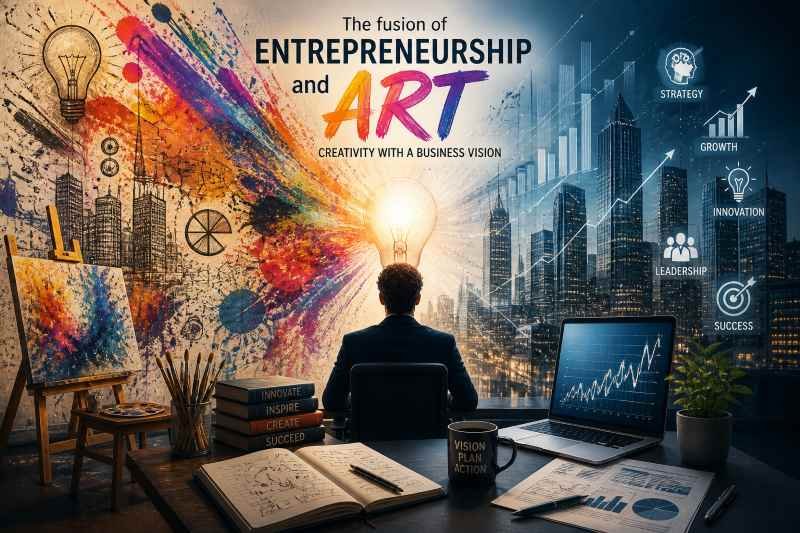
The convergence between entrepreneurial spirit and artistic disciplines represents a space where imagination meets strategy. This intersection not only drives innovation but also opens new opportunities to transform creative ideas into sustainable ventures.
In this context, artists and entrepreneurs face the challenge of balancing creative freedom with financial viability, building proposals that are both authentic and profitable.
The creative economy as a driver of development
The artistic sector plays an essential role in the economy. Cultural initiatives generate not only symbolic value but also tangible economic impact. From galleries to theaters and digital platforms, these activities encourage tourism, stimulate local commerce, and strengthen communities.
For example, a gallery does more than sell artwork—it attracts visitors who spend on hotels, restaurants, and other services. Similarly, performing arts venues create jobs and support nearby businesses.
According to relevant data, hundreds of thousands of companies are involved in the creation and distribution of art, employing millions of people . This highlights a significant untapped potential within the creative economy.
Challenges of cultural growth in cities
Despite its importance, the artistic sector faces major challenges. One of them is urban transformation: as cities become more attractive due to their cultural richness, living costs rise, displacing many creators.
This creates a paradox: artists help revitalize urban spaces but often struggle to remain in them. This underscores the need for sustainable models that integrate creatives into economic growth.
Balancing art and commercial interests
One of the most important dilemmas in this field is maintaining artistic integrity while engaging in commercial projects. Collaborating with businesses requires adapting to specific goals, which may influence the final artistic outcome.
However, this does not necessarily mean losing authenticity. On the contrary, a strategic approach allows art and business to complement each other, producing work that retains cultural value while achieving profitability.
Innovative business models in the arts
For an artistic project to be sustainable, having a solid business model is essential. Today, several alternatives have transformed the sector:
- Crowdfunding: enables projects to be funded directly by the audience.
- Grants and scholarships: provide financial support for creative development.
- Collaborative funds: promote fair distribution of resources.
These options create new opportunities, especially for emerging artists seeking independence and visibility.
The role of technology in cultural entrepreneurship
Technology has profoundly transformed how art is created, distributed, and consumed. Digital platforms, online marketplaces, and live streaming have expanded artists’ reach, allowing them to access global audiences.
Additionally, innovations such as virtual reality, augmented reality, and artificial intelligence are redefining artistic experiences, making them more immersive and interactive.
These advancements not only facilitate monetization but also contribute to cultural preservation and global creative exchange.
Toward a sustainable artistic ecosystem
The future of entrepreneurship in the arts depends on collaboration among creators, investors, and communities. Supporting art means not only consuming it but also investing in it and recognizing its value as a driver of social and economic development.
Encouraging environments where creativity can thrive alongside strong business models will help build a more inclusive, innovative, and resilient cultural sector.
Create Your LLC in the United States
Take the first step to legally establish your business in the U.S. quickly, easily, and professionally.
Create My LLC Now