



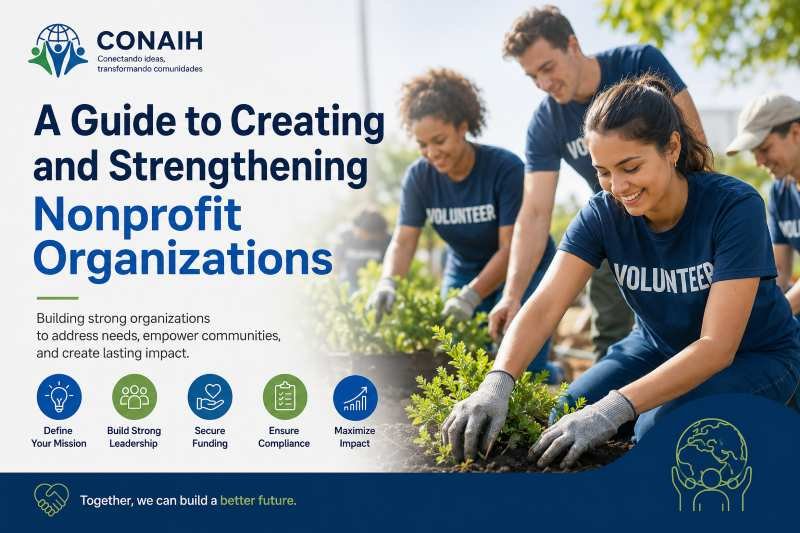
Nonprofit Organizations: Agents of Social Transformation
Nonprofit organizations play a vital role in promoting social well-being, protecting the environment, strengthening cultural development, and addressing community needs. Unlike traditional businesses, their primary objective is not to generate profit but to advance initiatives that benefit society.
Establishing a nonprofit organization requires strategic planning, legal compliance, and financial sustainability. Each stage is essential to ensuring the organization’s long-term success and impact.
What Is a Nonprofit Organization?
A nonprofit organization is an entity established to carry out activities that serve the public interest or benefit communities. It may be organized under different legal structures, including:
- Corporation
- Limited Liability Company (LLC)
- Unincorporated Association
- Trust
Its defining characteristic is that any revenue generated is reinvested into the organization’s mission rather than distributed to owners or shareholders.
Key Characteristics
Nonprofit organizations are typically distinguished by:
- Access to tax benefits and exemptions.
- Commitment to public service.
- Participation of volunteers and donors.
- Focus on social and community development.
These organizations work to address collective needs and create a positive impact on people’s quality of life.
Organizations Recognized Under Section 501(c)(3)
Many nonprofit organizations in the United States qualify for tax-exempt status under Section 501(c)(3) of the Internal Revenue Code (IRC), allowing them to receive important tax benefits.
To qualify, the organization must operate exclusively for purposes such as:
- Education
- Charitable activities
- Scientific research
- Public safety initiatives
- Religious activities
- Literary development
These organizations are subject to restrictions regarding political activities and may not use their resources to benefit private interests.
Other Categories of Tax-Exempt Organizations
In addition to 501(c)(3) entities, several other types of organizations may qualify for tax-exempt status, including:
- Social welfare organizations
- Civic leagues
- Social clubs
- Veterans’ associations
- Labor organizations
- Business leagues
- Fraternal societies
Political organizations may also qualify for specific tax exemptions under Section 527 of the IRC.
Benefits of Establishing a Nonprofit Organization
Creating a nonprofit organization offers numerous advantages for individuals and groups seeking to make a positive difference in their communities.
Some of the most significant benefits include:
- Access to grants and cooperative funding opportunities.
- Eligibility to receive donations from individuals and businesses.
- Potential tax exemptions.
- Greater capacity to develop social and community-based programs.
These resources help expand the reach and impact of nonprofit initiatives.
Steps to Create a Nonprofit Organization
Define the Mission and Purpose
The first step is to clearly identify the issue or challenge the organization seeks to address and establish a mission that will guide all of its activities.
Conduct a Needs Assessment
Researching the environment, learning about similar organizations, and identifying service gaps are critical steps. This process helps determine the unique value the new organization will provide.
Design the Organizational Structure
Once the mission is defined, it is important to establish key organizational elements, including:
- Organization name
- Mission statement
- Internal bylaws
- Governance model
These components serve as the foundation for effective operations.
Legal Formation of the Organization
Legal incorporation involves filing the necessary formation documents with the appropriate authorities and obtaining an Employer Identification Number (EIN), which is required for tax and administrative purposes.
Applying for Tax-Exempt Status
The organization must then apply for tax-exempt recognition through the appropriate forms and procedures, demonstrating that its activities serve the public interest.
Obtaining tax-exempt status is essential for accessing financial incentives and building trust among donors and supporters.
The Importance of a Strong Board of Directors
A Board of Directors is essential for ensuring transparent and effective governance.
Its primary responsibilities include:
- Overseeing organizational governance.
- Supporting fundraising efforts.
- Defining growth strategies.
- Ensuring accountability and transparency.
A diverse board with varied expertise strengthens leadership and organizational effectiveness.
Strategies for Securing Funding
Financial sustainability is one of the greatest challenges facing nonprofit organizations.
Common funding sources include:
- Government grants.
- Foundation and international organization funding.
- Individual and corporate donations.
- Fundraising events.
- Community campaigns.
Diversifying revenue streams helps ensure long-term organizational stability.
Communicating and Promoting the Mission
Raising awareness about the organization’s mission and programs is essential for attracting supporters, volunteers, and donors.
Common outreach tools include:
- Social media platforms.
- Press releases.
- Community events.
- Strategic partnerships with other organizations.
Building strong community relationships expands reach and enhances social impact.
Transparency and Legal Compliance
Maintaining public trust requires an ongoing commitment to transparency and accountability.
To achieve this, organizations should:
- File required reports and tax returns.
- Disclose how donated funds are used.
- Adhere to the objectives outlined in their mission.
- Implement ethical practices throughout all operations.
Compliance with these responsibilities strengthens credibility and supports long-term sustainability.
Commitment to the Common Good
Nonprofit organizations are powerful vehicles for promoting social development and addressing community needs. Their success depends on a clear mission, transparent management, and a steadfast commitment to serving the public good.
Through careful planning and strong organizational structures, nonprofits can become lasting forces for transformation, opportunity, and hope in the communities they serve.